ADU Investment Utah: A Real Estate Agent's Guide to Accessory Dwelling Units
April 6, 2026 · Jocelyn Kaufman
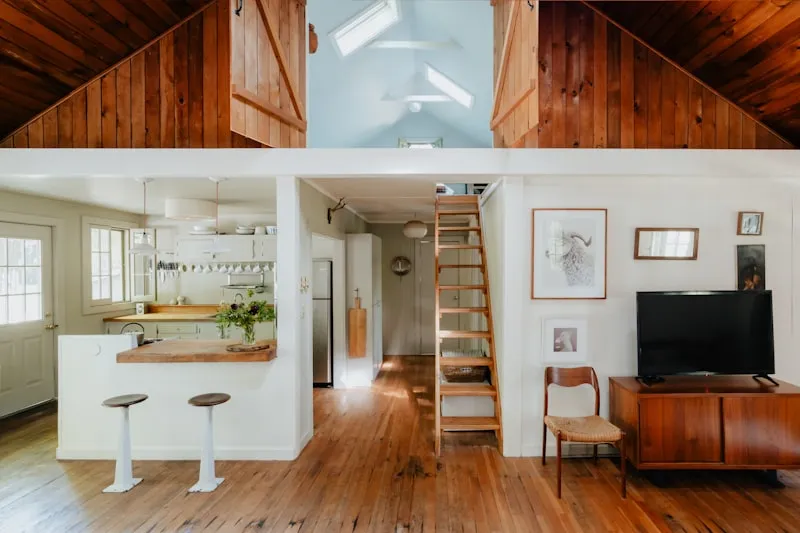
Accessory dwelling units—ADUs—have quietly become one of the hottest plays in Utah real estate investing. Whether your investor clients are looking to house hack on the Wasatch Front, generate passive income from a single-family lot, or future-proof their properties against changing market conditions, ADUs offer legitimate upside that shouldn't be ignored.
But here's the challenge: ADU investing requires a different analysis framework than traditional rental properties. You need to understand Utah's evolving ADU regulations, estimate rental income across two units instead of one, and account for the construction or renovation costs that turn a standard home into a duplex-like investment. Most agents—and most clients—aren't equipped to run those numbers accurately.
That's where you come in. This guide covers everything you need to understand ADU investments in Utah, how to help your investor clients evaluate ADU potential on properties, and why having access to investment analysis tools like See what Brick & Yield offers can make you the go-to agent for serious real estate investors.
What Are ADUs and Why Utah Agents Should Care
An accessory dwelling unit is a smaller, independent residential unit located on the same lot as a primary single-family home. Think of it as a secondary rental income source living right next door—an in-law apartment, a backyard cottage, a basement suite, or a converted garage. The primary home and ADU can be rented separately, owner-occupied with one unit rented, or both occupied by the owner's family members.
For Utah investors, ADUs represent a major shift in how they can leverage single-family home purchases. Instead of buying a duplex or fourplex, savvy investors are buying single-family homes in desirable neighborhoods and adding an ADU to capture dual income streams. In hot markets like Salt Lake City, Park City, Provo, and Ogden—where land is scarce and prices are high—ADUs maximize return on a single parcel.
And here's why this matters for your business: investors who understand ADU potential will pay different prices and pursue different properties. They're looking at single-family homes with larger lots, properties with utility access, neighborhoods where ADU regulations are friendly. If you can speak their language and run accurate numbers, you'll capture deals that other agents miss.
Utah ADU Regulations: What's Legal and Where
ADU regulations in Utah vary significantly by city and county. This is critical—you need to understand your local rules before advising clients on ADU potential. The good news: Utah has been moving in a pro-ADU direction. The bad news: there's no statewide mandate, so regulations are a patchwork.
Salt Lake City permits ADUs citywide in most zones, with a 1,200-square-foot cap and relaxed setback requirements. Several cities on the Wasatch Front—Midvale, Holladay, Sandy—have adopted similar policies. However, some areas still restrict ADUs or allow them only in specific zones. Park City has had ADU-friendly policies for years. Even within the same county, neighboring cities can have completely different rules.
Always verify ADU legality before showing a property or discussing ADU potential with clients. Check with the city planning department or a local attorney. The cost of bad information here is massive—your client could invest in a property only to discover they can't legally build the ADU they were counting on for returns.
Evaluating ADU Investment Potential: The Financial Framework
ADU investing requires a different financial analysis than a straightforward rental property. You're not just calculating cap rates on one unit—you're assessing dual income potential, higher expenses, construction costs, and refinancing implications.
Here's what your investor clients need to evaluate:
- Primary home rental income: What can the main house rent for? Are they owner-occupying or renting it out?
- ADU rental income: What's the market rent for a one- or two-bedroom ADU in that neighborhood? Utah ADU rents vary wildly—a Salt Lake City ADU might rent for $1,500, while a Provo ADU could be $1,100.
- Construction or renovation cost: This is the killer variable. A backyard cottage can run $200k+. A basement ADU might be $80–150k. This dramatically impacts your returns.
- Dual occupancy implications: Lenders treat ADU properties differently. Refinancing gets tricky. Insurance costs may spike. Property tax treatment varies by city.
- Financing strategy: Will they use a home equity line of credit, a cash-out refi, or construction financing? Each path has different implications for cash flow and returns.
Let's look at a realistic example: A Wasatch Front investor buys a $600k home on a 0.35-acre lot in Salt Lake City. The primary home rents for $2,800/month. They plan to build a 700-square-foot backyard ADU at a cost of $210k. The ADU rents for $1,400/month. Even after construction costs, property management, taxes, insurance, and maintenance, the dual income stream can generate meaningful annual returns. But getting those numbers wrong by 10% can sink the investment.
How ADUs Change Your Investor Clients' Strategy
Smart investors on the Wasatch Front are now thinking differently about property selection. They're looking for single-family homes with:
- Larger lot sizes (0.3+ acres minimum)
- Mature utility infrastructure that can support an ADU
- Neighborhoods where ADU regulations are permissive
- Properties that fit the ADU construction or renovation budget
- Areas with strong ADU rental demand (typically urban/suburban locations)
As an agent, this means you can guide conversations differently. Instead of just listing comparable sales, you're showing investor clients alternative purchase strategies. A $500k single-family home with a legal ADU upside becomes more attractive than a $500k duplex with fewer upside options. You're solving a different problem.
But here's the honest truth: most agents don't have tools to quickly run these dual-unit scenarios. You need software that lets you plug in ADU rental income, construction costs, and financing options—then instantly see cap rates, cash flow, and return projections. That's how you gain credibility and close investor deals. Sign Up to get early access to tools built for real estate agents who work with investors.
Common ADU Investment Mistakes (And How to Help Clients Avoid Them)
Working with ADU investors, you'll see patterns. Here are the mistakes smart agents help clients avoid:
Underestimating construction costs: ADU builds always run over budget. Your client budgets $150k and ends up spending $195k. This kills the return profile. Factor in a 15–20% contingency.
Overestimating rental income: That $1,500 ADU rent estimate might be optimistic. Market research is essential. Talk to local property managers and active investors.
Ignoring refinancing constraints: Lenders treat ADU properties as non-traditional. A client buys a property, adds an ADU, then can't refinance to pull out equity. Understand your lender's ADU policies upfront.
Buying in ADU-restricted zones: The worst outcome: your client buys a house, discovers they can't legally build an ADU, and the ADU strategy dies. Always verify zoning before making an offer.
Neglecting property management complexity: One tenant is manageable. Two units (primary home + ADU) doubles the management burden. If your client doesn't have bandwidth, that affects returns.
The Bottom Line
ADU investment is reshaping Utah real estate, especially on the Wasatch Front. Investor clients who understand ADU potential have more options and can generate stronger returns from single-family home purchases. But the analysis is more complex than a standard rental property evaluation.
Your competitive advantage is being the agent who can fluently discuss ADU potential, ask the right financial questions, and run accurate numbers on dual-income scenarios. You become a trusted advisor, not just a transaction facilitator. That positions you to build a real investor business and capture deals in a market where smart investors are actively looking for agents who understand their strategy.
If you're serious about working with real estate investors, you need tools that work as hard as you do. Software that handles ADU analysis, cash flow projections, and financing scenarios puts you in front of your competition and gives your clients confidence in your recommendations.

Written by
Jocelyn Stoddard
Founder of Brick & Yield — a Utah real estate agent and investor who built Brick & Yield to keep agents at the center of every client relationship.